
Washington News
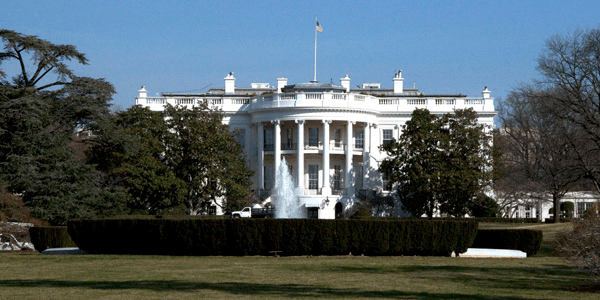
No Tax on Tips for 68 Jobs
On September 2, the U.S. Department of Treasury published a preliminary list of 68 jobs that qualify for the “No Tax on Tips” deduction. The One Big Beautiful Bill Act (OBBBA) created a $25,000 deduction for tipped income. The deduction applies to single individuals with incomes up to $150,000 or married couples filing jointly with incomes up to $300,000.
The list is divided into eight industry categories. The release states, "Treasury and the IRS anticipate that the official proposed list will be substantially the same as this preliminary list."
The list is quite broad. Tax Foundation Senior Policy Analyst Alex Muresianu stated, "This is a much broader set of occupations than I think some were expecting. As such, the policy could end up being more expensive than previously anticipated." The "No Tax on Tips" provision is available from 2025 until 2028. The federal government estimated the cost would be $32 billion over the next decade.
There are eight principal categories for the occupations. A non-exhaustive list of jobs within each category is as follows:
- Beverage & Food Service — This section includes bartenders, wait staff, food service staff, chefs, cooks, fast food workers, dishwashers, restaurant and coffee shop workers and bakers.
- Entertainment & Events — This category includes dancers, individuals working in gambling establishments such as dealers or cashiers, musicians, singers, disc jockeys and other types of entertainment staff. It also includes ushers, ticket takers and staff who assist in performances.
- Hospitality & Guest Services — As expected, this section covers bellhops, concierge, hotel staff and housekeeping staff.
- Home Services — The home services category includes individuals who assist with any type of home maintenance, repair and landscaping, such as electricians, plumbers, installers, appliance repairers, cleaning service workers, locksmiths and roadside assistance helpers.
- Personal Services — This group includes personal care workers, private event planners, photographers and videographers, pet caretakers, tutors, nannies and babysitters.
- Personal Appearance & Wellness — This category includes skin care specialists, barbers, hairstylists, cosmetologists, manicurists, eyebrow and waxing technicians, makeup artists, exercise trainers, tattoo artists, tailors and shoe and leather workers.
- Recreation & Instruction — This category includes golf caddies, recreation instructors, tour pilots and guides, travel guides and sports instructors.
- Transportation & Delivery — This group includes taxis drivers, workers on charter boats, rickshaw or carriage drivers and movers.
"Realm of Fantasy" Easement Appraisal Rejected
In Buckelew Farm LLC et al. v. Commissioner; No. 24-13268 (11th Cir. 2025), the Eleventh Circuit issued an unpublished decision upholding a Tax Court decision that reduced a conservation easement charitable deduction by approximately 90%. The taxpayer was also liable for a 40% valuation misstatement penalty.
Between 1998 and 2006, Buckelew Farm, LLC (Buckelew) acquired around 1,500 acres in Jones County, Georgia for approximately $4 million. The property was subsequently offered for sale for $9 million, but a timber management organization estimated the timber value to be approximately $6 million.
Buckelew was in contact with attorney James M. Adams, III to discuss a conservation easement charitable deduction plan. They organized Big Knoll Farms, LLC to purchase the property for $6 million. Adams obtained an appraisal estimate that the valuation of the property for purposes of the easement could be approximately $60 million.
The valuation depended upon approval of a subdivision plan by Jones County’s Zoning Director, Tim Pitrowski. After an initial meeting, he issued an opinion letter that indicated it was "more likely than not" the land subdivision plan would be approved. However, at the Tax Court trial, Pitrowski stated he did not have full information on the plan, and the added information would change his opinion.
Taxpayer appraiser Daly Hayter, Jr. valued the property at $50.48 million. Based on a "before and after" determination, Hayter claimed the charitable easement deduction would be $47.6 million. Buckelew deeded a conservation easement to the Southeast Regional Land Conservancy, Inc. and reported a charitable deduction of $47.57 million.
The Internal Revenue Service (IRS) issued a Final Partnership Administrative Adjustment (FPAA) and denied the charitable deduction. The Tax Court proceeding resulted in three holdings. The Tax Court determined there was a valid charitable conservation easement deduction, the value was grossly overstated, and therefore a 40% penalty under Section 6662(a) was applicable and the IRS fraud claim was not valid.
The key issue for the valuation was the question of the methodology and whether a development plan was legally impermissible. The taxpayer asserted that the Tax Court was wrong in claiming that the development plan was legally impermissible and objected to procedural actions.
The taxpayer did not contest the determination by the Tax Court that rejected the discounted cash flow method of the taxpayer appraiser and accepted the comparable valuation methodology of IRS appraiser Zac Ryan.
Because the only valuation issue raised by the taxpayer was whether or not the use was legally impermissible, the Eleventh Circuit determined the Tax Court valuation was appropriate. Valuation is defined as "the highest and most profitable use for which the property is adaptable and needed or likely to be needed in the reasonably near future." Even if the subdivision use was permissible, the taxpayer valuation by Hayter was not acceptable. The Tax Court determined his valuation was "firmly planted somewhere in the realm of fantasy."
The basic test of valuation is to determine the highest and best use. If the proposed use is likely to be deemed risky by a hypothetical buyer, then it will not qualify as the highest and best use. Therefore, the other procedural issues were within the bounds of the harmless-error review of appellate courts, and the key question was valuation. The Eleventh Circuit determined the Tax Court decision on valuation was correct.
September Tax Agenda for Congress
The One Big Beautiful Bill Act (OBBBA) included multiple tax changes. However, there are a number of potential tax issues that will be presented to Congress in September. These may include some changes that affect nonprofits and individuals.
There are three possible options for Congress. It may pass a second reconciliation bill, could craft a bipartisan tax bill or create an extenders package. Some or all of these six agenda items could be included in a 2025 bill.
- Gambling Tax Deduction — OBBBA reduced the deduction for gambling losses from 100% to 90% but maintained 100% taxation of gambling gains. Representatives from Nevada in both the House and the Senate have introduced bills to restore the full deduction. Because the 90% rule does not take effect until 2026, there is time to change this provision. Nevada Representative Dina Titus stated, "If you make people pay taxes on fake money, they are not going to deduct it or report it or even gamble here — they will go offshore or to the black market, and so you will not be raising that kind of revenue."
- U.S. Citizens Living Abroad — U.S. citizens living overseas are termed "expats" and are taxed on their income, with various credits available. The Residence-Based Taxation for Americans Abroad Act would allow expats to be taxed the same as alien individuals. This would require them to pay tax only on their U.S.-source income. This proposed bill expired in January and would need to be reintroduced to be able to move forward in a reconciliation bill.
- Nonprofit Retirement Plan Incentives — There is support in both the House and the Senate for allowing nonprofits to benefit from retirement plan startup tax credits. These credits are currently available to for-profit employers. Representative Vern Buchanan (R-FL) suggests the tax credits should be allowed for nonprofits who would apply them against their payroll tax liability. He stated, "More Americans will be able to build financial security for the future, and nonprofits will gain another way to invest in their workforce."
- IVF Tax Credit — Several members of Congress have supported the Infertility Treatment Affordability Act of 2025, which provides a credit for up to $5,000 for qualified fertility treatments. There is bipartisan support for creating tax incentives that lower the cost of infertility services.
- No Tax on Home Sales — The President has suggested there could be an elimination of the tax on home sales. Two bills have been introduced in the House. One would eliminate capital gains tax on the sale of a principal residence. The More Homes on the Market Act would raise the capital gain tax exclusion to $500,000 for single individuals and $1 million for couples filing jointly.
- Crypto Taxes — There are several bills that may modify the taxation of cryptocurrency. The changes could include new reporting requirements for de minimis transactions, wash sale rules and mark-to-market elections for traders. There is a push to issue guidance on staking, mining and other income that is unique to cryptocurrency. There may also be new provisions on charitable crypto contributions, perhaps including a removal of the requirement for an appraisal on cryptocurrency gifts if they may be valued on a widely used exchange.
Editor's Note: The most likely tax update will be a change in the capital gains tax exclusion for a home sale. The exclusion of $250,000 for single individuals and $500,000 for married couples was created in 1997. Many of the exclusions and credits that were previously created have been adjusted for inflation. The inflation from 1997 to 2025 would result in an increase to $503,000 for single individuals or $1,006,000 for married couples. Therefore, it seems probable that at some point the home-sale exclusions will be adjusted for inflation.
Applicable Federal Rate of 4.8% for September: Rev. Rul. 2025-17; 2025-36 IRB 1 (17 August 2025)
The IRS has announced the Applicable Federal Rate (AFR) for September of 2025. The AFR under Sec. 7520 for the month of September is 4.8%. The rates for August of 4.8% or July of 5.0% also may be used. The highest AFR is beneficial for charitable deductions of remainder interests. The lowest AFR is best for lead trusts and life estate reserved agreements. With a gift annuity, if the annuitant desires greater tax-free payments the lowest AFR is preferable. During 2025, pooled income funds in existence less than three tax years must use a 4.0% deemed rate of return. Charitable gift receipts should state, “No goods or services were provided in exchange for this gift and the nonprofit has exclusive legal control over the gift property.”
Previous Articles
How To Protect Yourself From Identity Thieves
